Designing Better Transformers—Much Faster with Physics-Informed Neural Networks
January 15, 2026
Authors
 Philipp Brendel
Designing Better Transformers—Much Faster Than Before
Transformers are everywhere: in power supplies, renewable energy systems, electric vehicles, and industrial electronics. Designing them well is crucial, because even small inefficiencies can lead to wasted energy, heat, and higher costs. But designing a transformer is not easy—engineers usually rely on detailed simulations that can take minutes, hours, or even days for a single design.
Two of our recent publications show that this process can be dramatically sped up using artificial intelligence—without sacrificing the laws of physics that make simulations trustworthy.
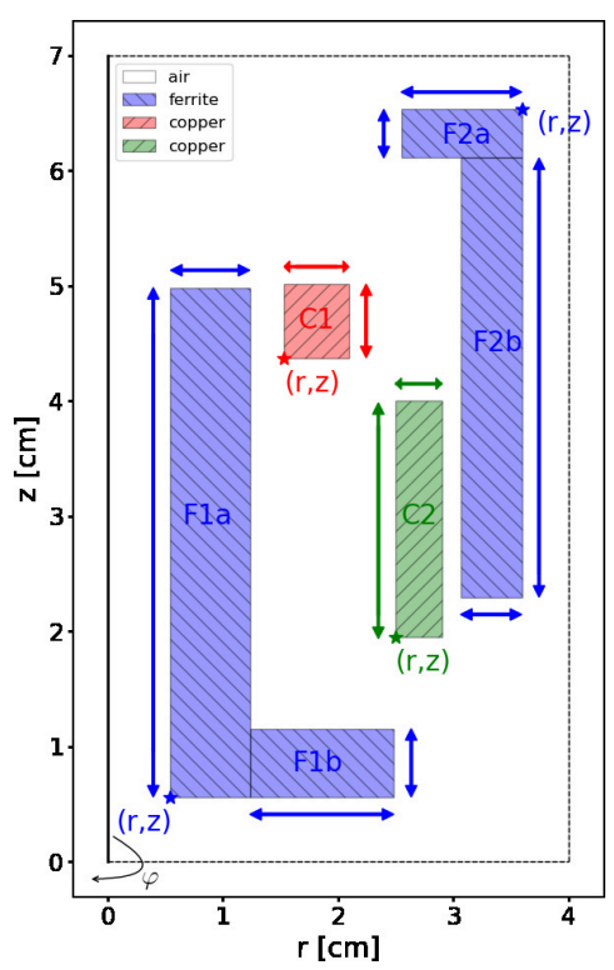
Fig. 1: Example of a transformer geometry or application context.
The Goal: Fast but Accurate Simulations
Traditionally, engineers use physics-based simulation tools to understand how magnetic fields behave inside a transformer. These tools are very accurate, but they are also slow. When you want to test thousands of design variations—changing shapes, sizes, or materials—computation time quickly becomes a bottleneck.
This makes it hard to explore many alternatives or to quickly find designs that minimize energy losses.
The Idea: Teaching AI the Laws of Physics
Instead of replacing physics with “black-box” AI we use convolutional physics-informed neural networks—a type of AI that is trained on the physical laws that govern magnetic fields.
In this case the neural network learns to obey Maxwell’s equations, the fundamental rules of electromagnetism for varying transformer layouts.
After the training process we can use the network to make predictions that are both fast and physically reliable.
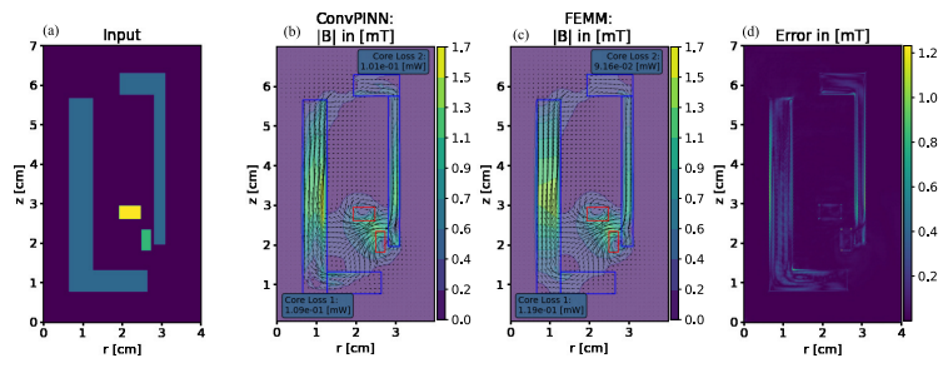
Fig. 2: Illustration of physics-informed neural network predicting magnetic fields.
From Magnetic Fields to Key Performance Metrics
The trained PINN is embedded into a wholistic workflow that allows fast inference of crucial engineering quantities. First, the AI predicts the magnetic field distribution inside the transformer in just milliseconds. From these fields, essential electrical properties—inductance and magnetic coupling—are calculated, describing how well energy is stored and transferred between coils.
The same magnetic field information is then used to estimate core losses, which represent energy lost as heat in the magnetic material and strongly affect efficiency and cooling requirements.
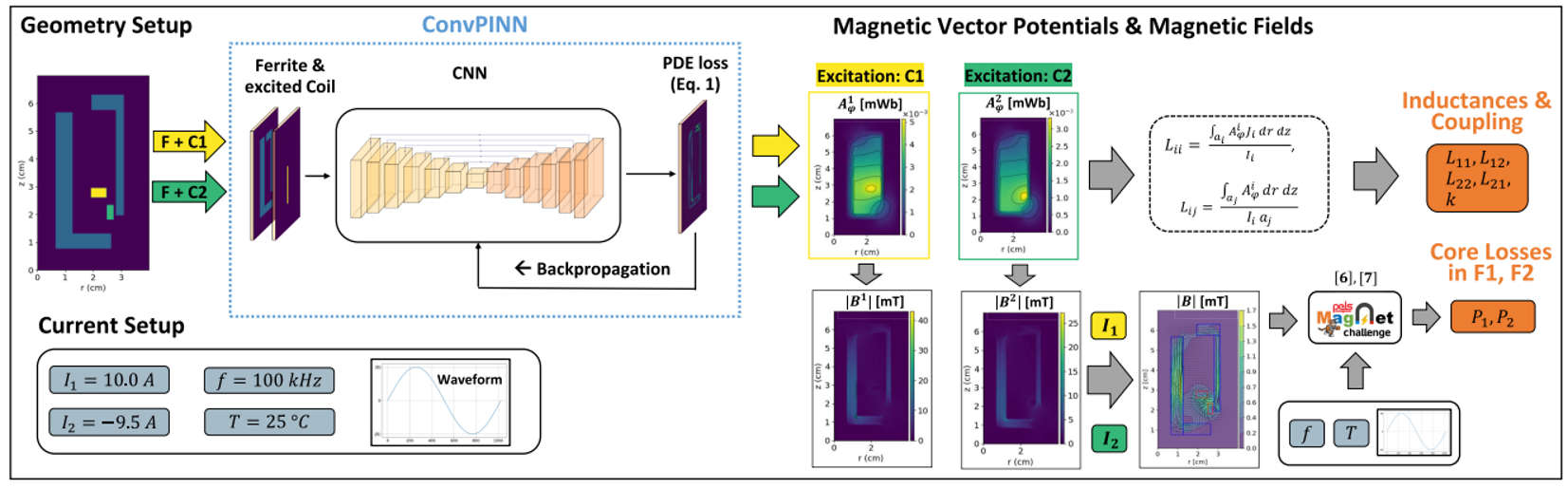
Fig. 3: Example of predicted core losses or performance metrics from the PINN workflow.
Why This Matters
Compared to conventional simulations, the new approach can be orders of magnitude faster, especially when many designs are evaluated in parallel. This opens the door to:
- Rapid design optimization
- Exploring more creative transformer geometries
- Reducing energy losses and material costs
- Shortening development cycles from days to minutes
In practice, this means engineers can interactively test ideas and quickly narrow down the best designs—something that was previously impractical.
These publications show how AI can become a trusted engineering assistant, not by guessing answers, but by respecting physical laws.
As computing hardware and AI methods continue to improve, such hybrid approaches could become standard tools—not just for transformers, but for many complex engineering systems.
The result? Smarter designs, faster innovation, and more efficient energy systems.
Sources
[1] Brendel, P., Medvedev, V., & Rosskopf, A. (2023). Physics-informed neural networks for magnetostatic problems on axisymmetric transformer geometries. IEEE Journal of Emerging and Selected Topics in Industrial Electronics, 5(2), 700-709.
Read publication[2] Brendel, P., Medvedev, V., & Rosskopf, A. (2024). Convolutional Physics-Informed Neural Networks for Fast Prediction of Core Losses in Axisymmetric Transformers. IEEE Transactions on Magnetics.
Read publication
Image copyright:
Creative Commons License: The images used in this post are licensed under Creative Commons and used in accordance with their respective licenses and are attributed to their original creators where required. All rights to the images remain with their respective copyright holders.
© 2026 Fraunhofer IISB. Personal use permitted. For other uses, please contact the authors.