

Loading...

AI for Simulation Web Services

Web services by the Fraunhofer Institute for Integrated Systems and Device Technologies

Discover innovative solutions to enhance your workflows and achieve better results in simulation and design.

Research for Your Challenges

As a research institute, we partner with industry to turn AI research into practical solutions. Tell us your challenge — we develop the right approach together.

Agentic Workflows

We develop AI agents and agentic workflows that take over repetitive steps in engineering and simulation pipelines — gathering data, setting up and running simulations, evaluating results, and exploring design variants. Engineers stay in control of the decisions; the agents handle the routine work.

Fast Surrogate Models & PINNs

We develop physics-informed neural networks (PINNs) and surrogate models that can replace time-consuming simulations with fast, physically consistent predictions. Because they incorporate the governing equations, they need less or even no training data compared to purely data-driven models. We have applied them to lithography, semiconductor process steps and battery models, and integrate them into optimization and inverse-design workflows.

Custom ML Models

Beyond simulation, we develop machine learning models tailored to your data — for example image recognition, classification of measurement data. We start with a proof of concept on your data and, if it works as expected, develop it into a model you can run in-house.

ECPE White Paper 'AI in Power Electronics'
news
October 16, 2026

ECPE White Paper 'AI in Power Electronics'

The ECPE European Center for Power Electronics has released its new White Paper 'Artificial Intelligence in Power Electronics'. Andreas Rosskopf (Department Head Modeling and AI) contributed to the paper as a member of the ECPE Task Force of almost 40 experts from industry and academia. The White Paper asks where AI is already making a difference in power electronics today and where its real potential lies. The answer is not a fully automated design process, but the AI-assisted engineer, who develops, tests and monitors faster and with far fewer failures. AI is looked at through three lenses: pattern recognition with machine learning and deep neural networks, large language models as design assistants, and reinforcement learning for exploring new converter designs. A separate companion paper addresses AI-supported power electronics education. Many of the topics discussed are at the heart of our work in Modeling and AI, and we are glad to see them reflected in a joint European position. Both papers are freely available for download on the ECPE website.
Read More →
ECCE Europe 2026
news
September 18, 2026

ECCE Europe 2026

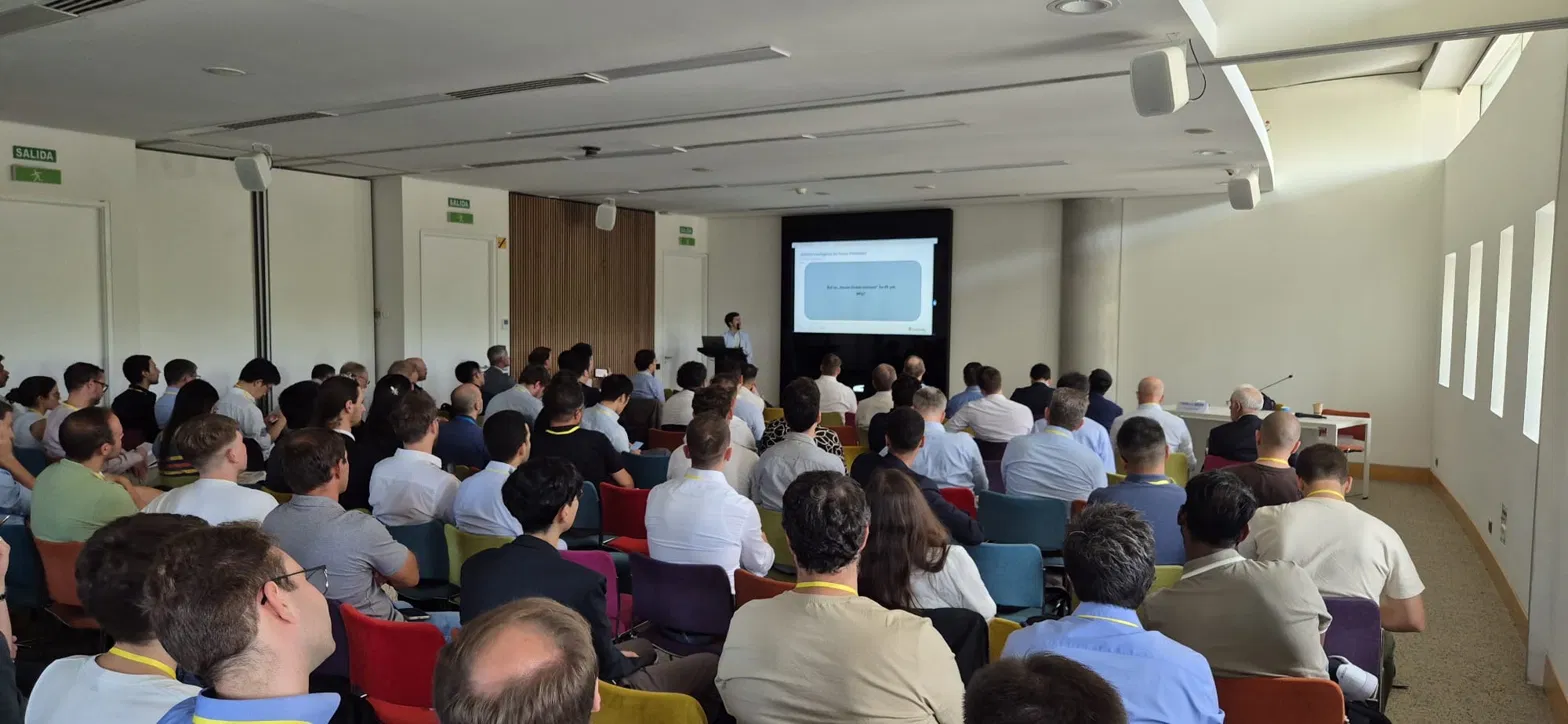
Rodrigo Coelho represented our group at this year's IEEE ECCE Europe in Valencia, the flagship European conference for power electronics and energy conversion. On behalf of Andreas Rosskopf (Department Head Modeling and AI), he joined the Industry Forum panel on 'Design Automation and AI for Industrial Power Electronics', chaired by Wilmar Martinez Martinez (KU Leuven), alongside experts from PE Systems, Silicon Austria Labs and Semiwise. In line with the scope of IEEE PELS TC10, the panel discussed where AI-based and automated design tools already create value in real industrial workflows, where they still fall short, and what is needed for broader deployment: from simulation-driven optimisation and surrogate modelling to model reliability, data quality, engineering trust and qualification for safety-critical applications. The shared conclusion was clear: AI will not replace engineering expertise, but it can substantially augment it. We thank the organisers and fellow panelists for the open and insightful exchange and look forward to feeding these impulses into our own research!

Read More →
Tiny Recursive Reinforcement Learning: Can Recursion Speed Up Q-Learning?
blog
August 24, 2026

Tiny Recursive Reinforcement Learning: Can Recursion Speed Up Q-Learning?

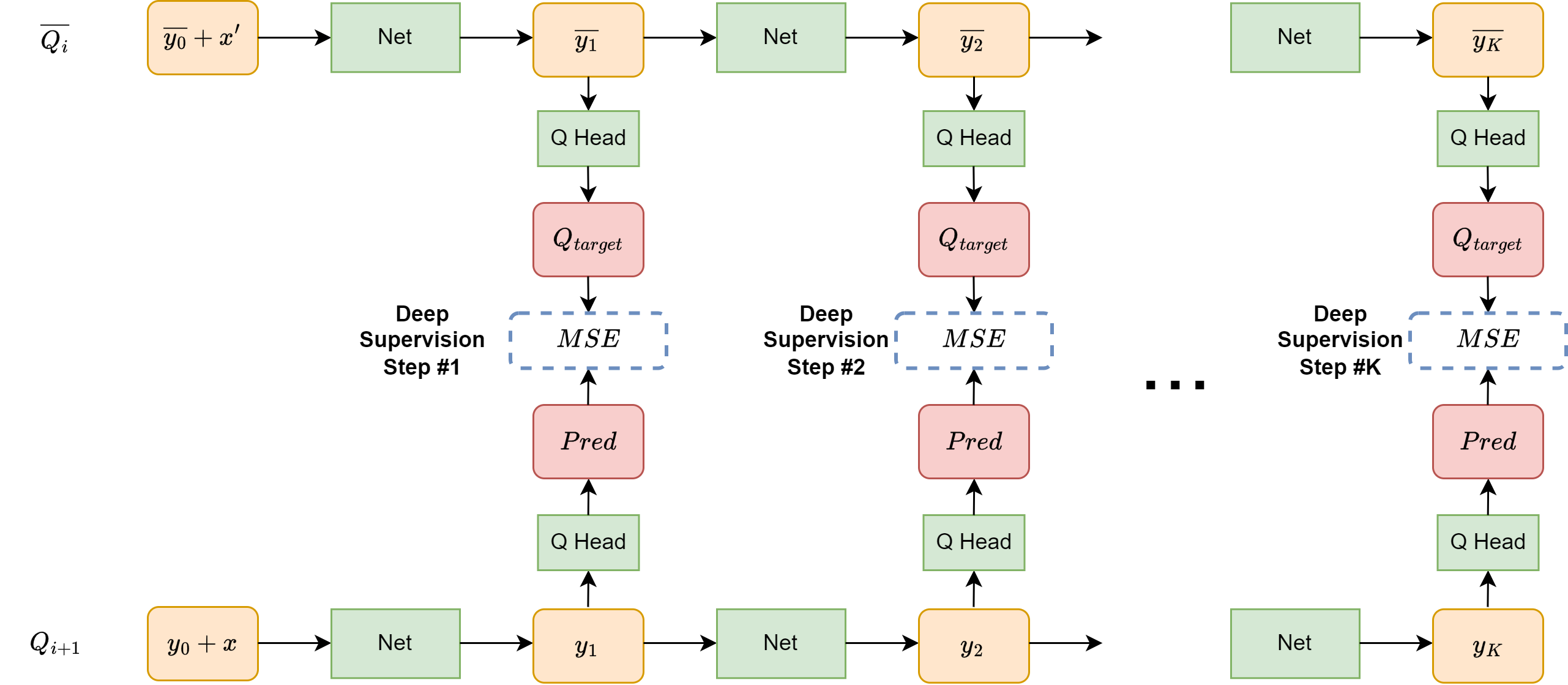
In this blog post we ask a simple question: can the Tiny Recursive Model (TRM), which solves difficult reasoning problems by reusing the same parameters recursively, also be useful for reinforcement learning? We adapted TRM into a Q-network and compared it with standard MLP and CNN architectures. The result was promising, but ultimately mixed: the recursive model sometimes learned faster early in training, but often converged to a worse solution than conventional architectures.

Authors

Rodrigo Coelho

Open Post →
Towards reliable state estimation in lithium-ion batteries with physics-informed operator learning
blog
August 11, 2026

Towards reliable state estimation in lithium-ion batteries with physics-informed operator learning

This work addresses two questions at the core of many battery applications: How can we reliably estimate the internal states of a battery cell from measurable quantities like voltage and current profiles, and how can we do that fast enough to be useful in real-world applications?

Authors

Philipp Brendel

Open Post →
WCCM-ECCOMAS 2026
news
June 20, 2026

WCCM-ECCOMAS 2026

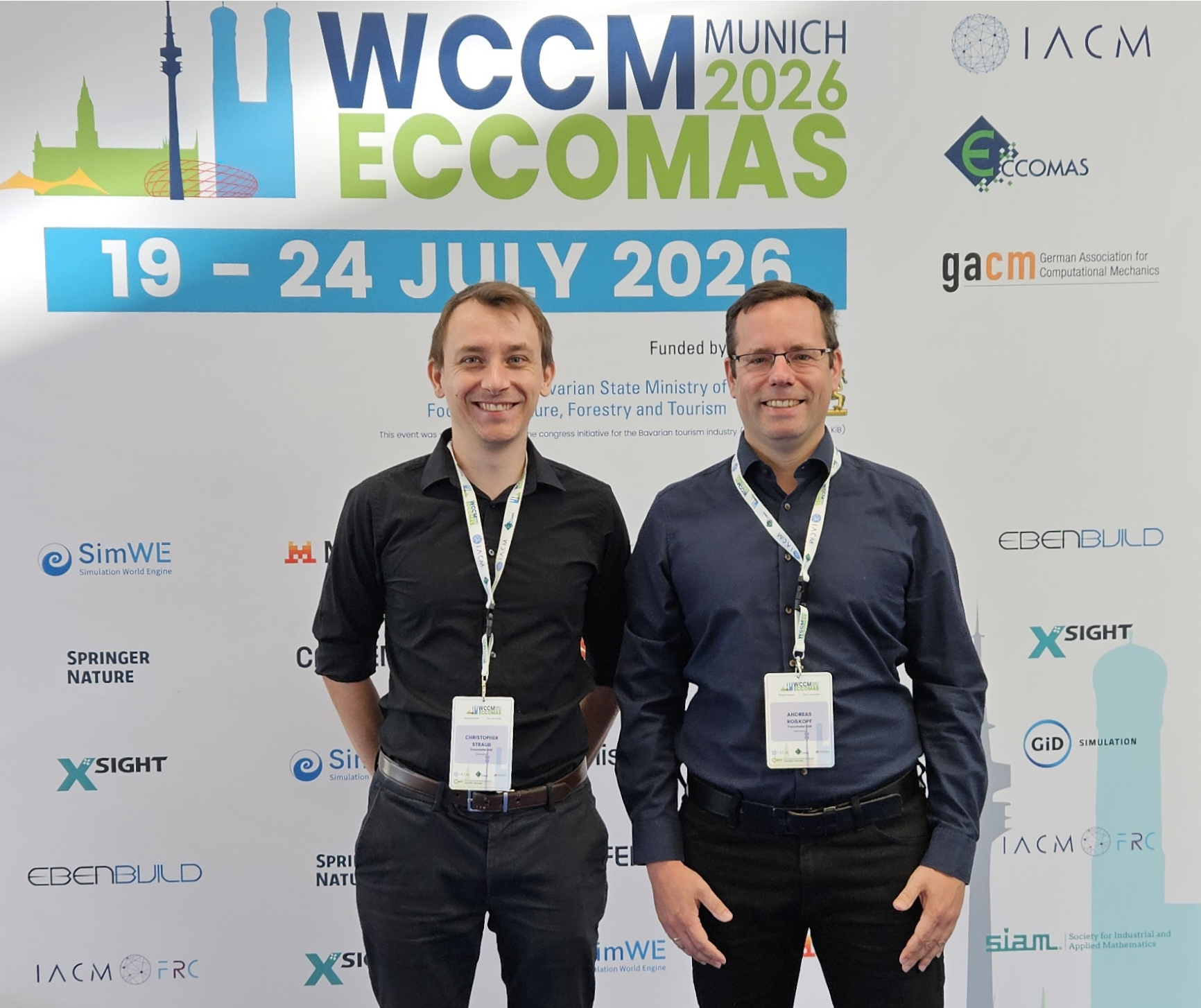
Christopher Straub represented our group at this year's World Congress on Computational Mechanics (WCCM), one of the largest conferences in the field of computational methods in applied sciences and engineering. Together with Andreas Rosskopf (Department Head Modeling and AI), he was able to attend numerous presentations and discuss with the more than 5000 participants how state-of-the-art AI methods can best be integrated into industrial use cases. The discussions following Christopher’s talk on our work on 'Data-Calibrated Simulations of Photoresist Photoreactions via Physics-Informed Neural Operators' were particularly inspiring. We can not wait to put all the new insights and ideas from WCCM into practice!

Read More →
PhysML Workshop 2026
news
June 15, 2026

PhysML Workshop 2026

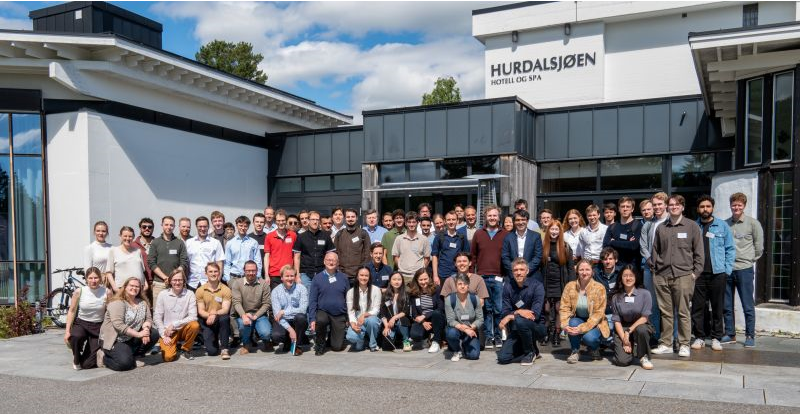
In June 2026, Christopher Straub represented our group at the PhysML Workshop 2026 in Oslo, Norway. The event was hosted on the beautiful shore of Lake Hurdalsjøen and offered a focused, high-quality Scientific Machine Learning conference program. With a strong line-up of speakers from academia and industry (incl. Google DeepMind, NVIDIA, Mistral, and Autodesk), the workshop featured many engaging talks and discussions. Christopher gave a talk on “Physics-informed fine-tuning of PDE foundation models,” sharing some of our ongoing work in this area. We are very much looking forward to returning to Oslo and to future editions of PhysML.

Read More →

Where you can find us

Explore the map to see where we shared our work around the world.