Loading...

News & Updates

Stay informed about the latest developments in AI and simulation at Fraunhofer IISB.

October 16, 2026

ECPE White Paper 'AI in Power Electronics'
news
ECPE White Paper 'AI in Power Electronics'
The ECPE European Center for Power Electronics has released its new White Paper 'Artificial Intelligence in Power Electronics'. Andreas Rosskopf (Department Head Modeling and AI) contributed to the paper as a member of the ECPE Task Force of almost 40 experts from industry and academia. The White Paper asks where AI is already making a difference in power electronics today and where its real potential lies. The answer is not a fully automated design process, but the AI-assisted engineer, who develops, tests and monitors faster and with far fewer failures. AI is looked at through three lenses: pattern recognition with machine learning and deep neural networks, large language models as design assistants, and reinforcement learning for exploring new converter designs. A separate companion paper addresses AI-supported power electronics education. Many of the topics discussed are at the heart of our work in Modeling and AI, and we are glad to see them reflected in a joint European position. Both papers are freely available for download on the ECPE website.
September 18, 2026

ECCE Europe 2026
news
ECCE Europe 2026
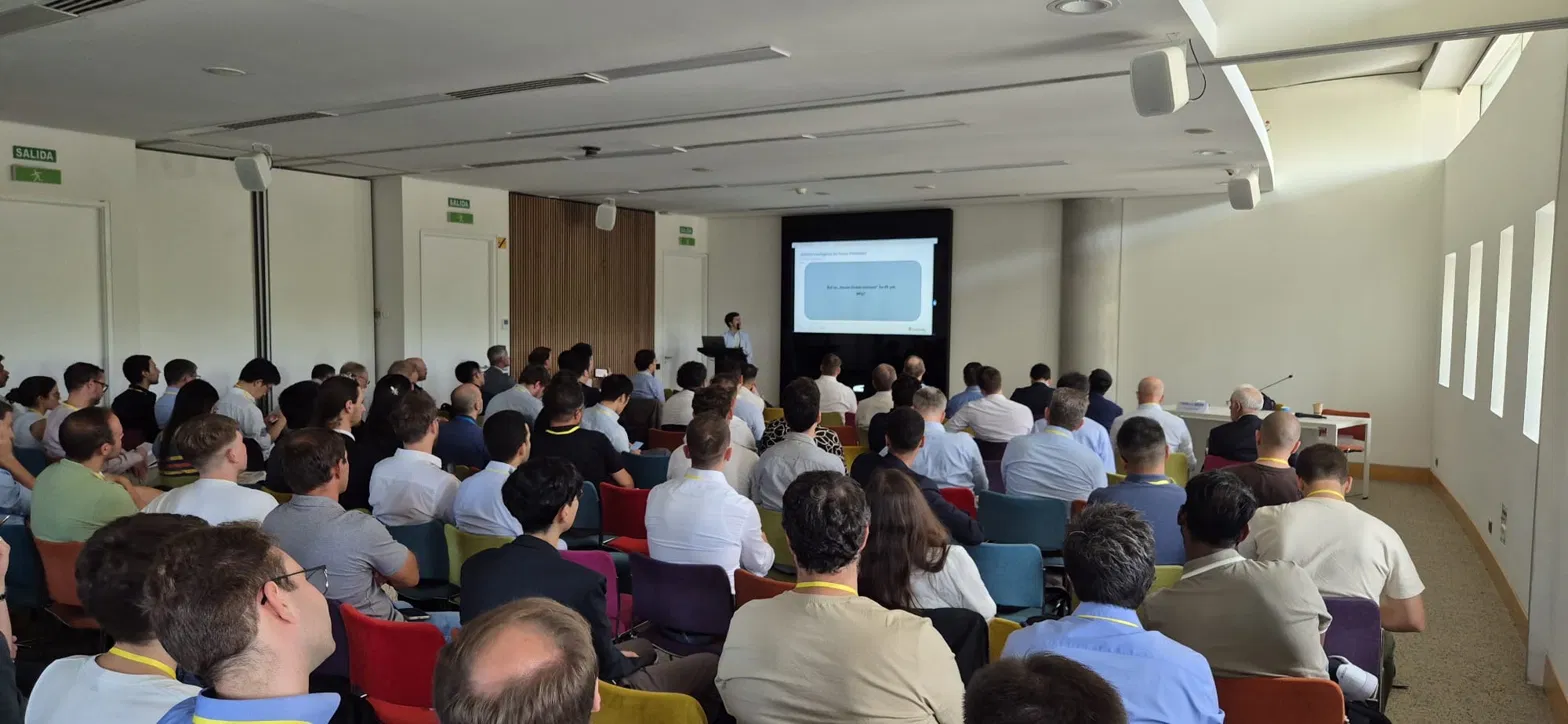
Rodrigo Coelho represented our group at this year's IEEE ECCE Europe in Valencia, the flagship European conference for power electronics and energy conversion. On behalf of Andreas Rosskopf (Department Head Modeling and AI), he joined the Industry Forum panel on 'Design Automation and AI for Industrial Power Electronics', chaired by Wilmar Martinez Martinez (KU Leuven), alongside experts from PE Systems, Silicon Austria Labs and Semiwise. In line with the scope of IEEE PELS TC10, the panel discussed where AI-based and automated design tools already create value in real industrial workflows, where they still fall short, and what is needed for broader deployment: from simulation-driven optimisation and surrogate modelling to model reliability, data quality, engineering trust and qualification for safety-critical applications. The shared conclusion was clear: AI will not replace engineering expertise, but it can substantially augment it. We thank the organisers and fellow panelists for the open and insightful exchange and look forward to feeding these impulses into our own research!

June 20, 2026

WCCM-ECCOMAS 2026
news
WCCM-ECCOMAS 2026
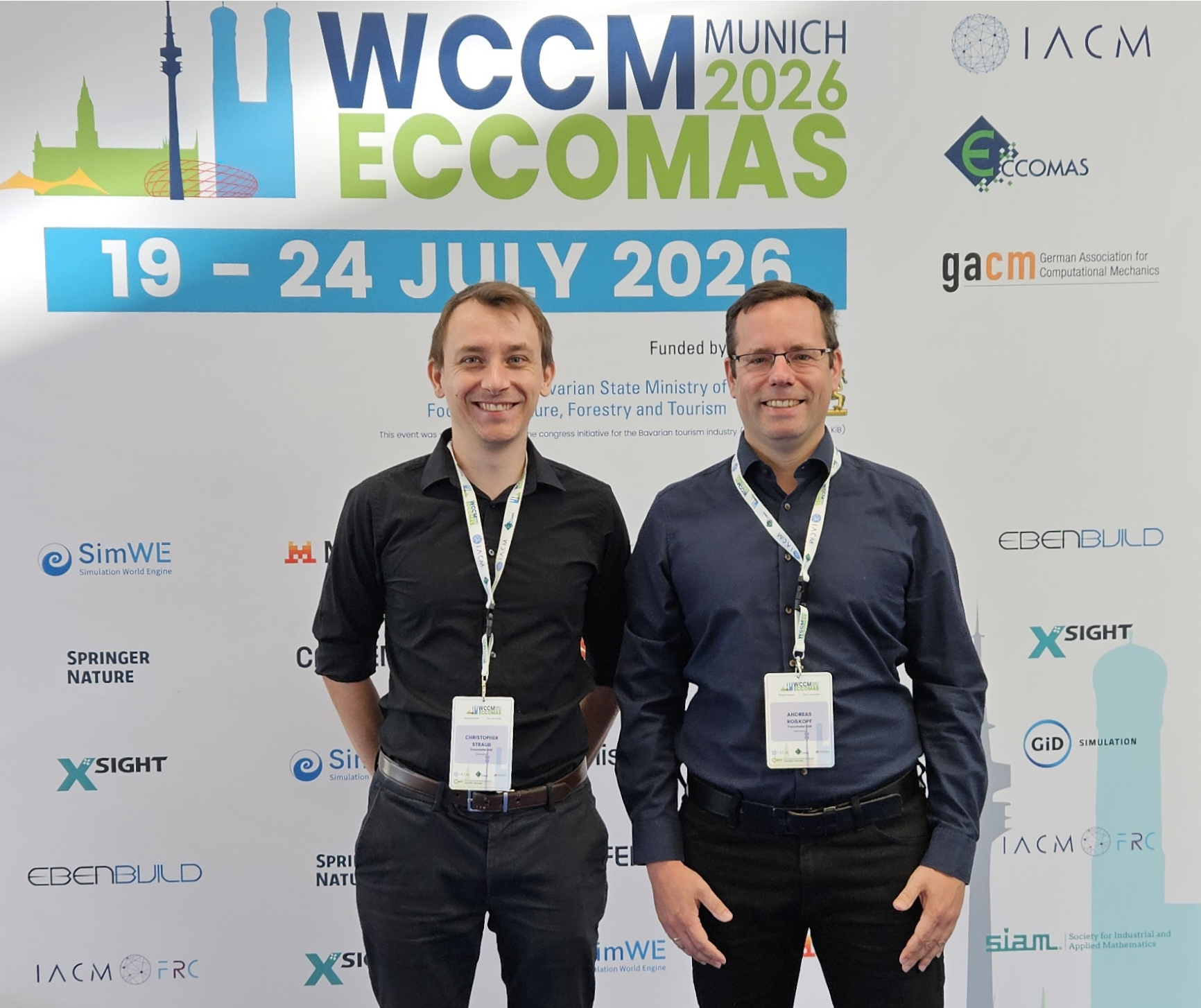
Christopher Straub represented our group at this year's World Congress on Computational Mechanics (WCCM), one of the largest conferences in the field of computational methods in applied sciences and engineering. Together with Andreas Rosskopf (Department Head Modeling and AI), he was able to attend numerous presentations and discuss with the more than 5000 participants how state-of-the-art AI methods can best be integrated into industrial use cases. The discussions following Christopher’s talk on our work on 'Data-Calibrated Simulations of Photoresist Photoreactions via Physics-Informed Neural Operators' were particularly inspiring. We can not wait to put all the new insights and ideas from WCCM into practice!

June 15, 2026

PhysML Workshop 2026
news
PhysML Workshop 2026
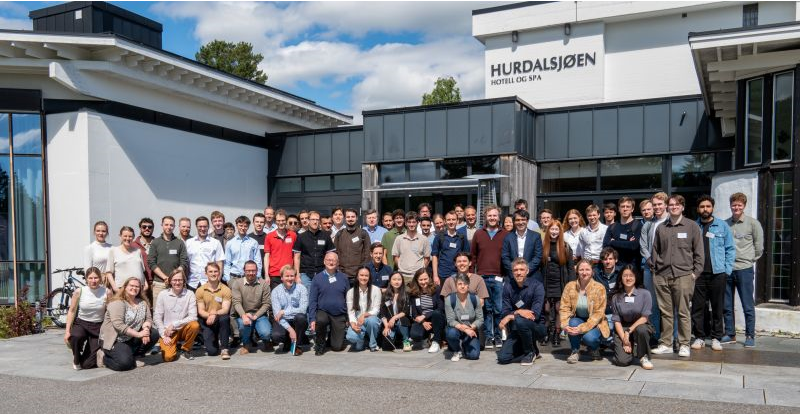
In June 2026, Christopher Straub represented our group at the PhysML Workshop 2026 in Oslo, Norway. The event was hosted on the beautiful shore of Lake Hurdalsjøen and offered a focused, high-quality Scientific Machine Learning conference program. With a strong line-up of speakers from academia and industry (incl. Google DeepMind, NVIDIA, Mistral, and Autodesk), the workshop featured many engaging talks and discussions. Christopher gave a talk on “Physics-informed fine-tuning of PDE foundation models,” sharing some of our ongoing work in this area. We are very much looking forward to returning to Oslo and to future editions of PhysML.

June 9, 2026

PCIM 2026
news
PCIM 2026
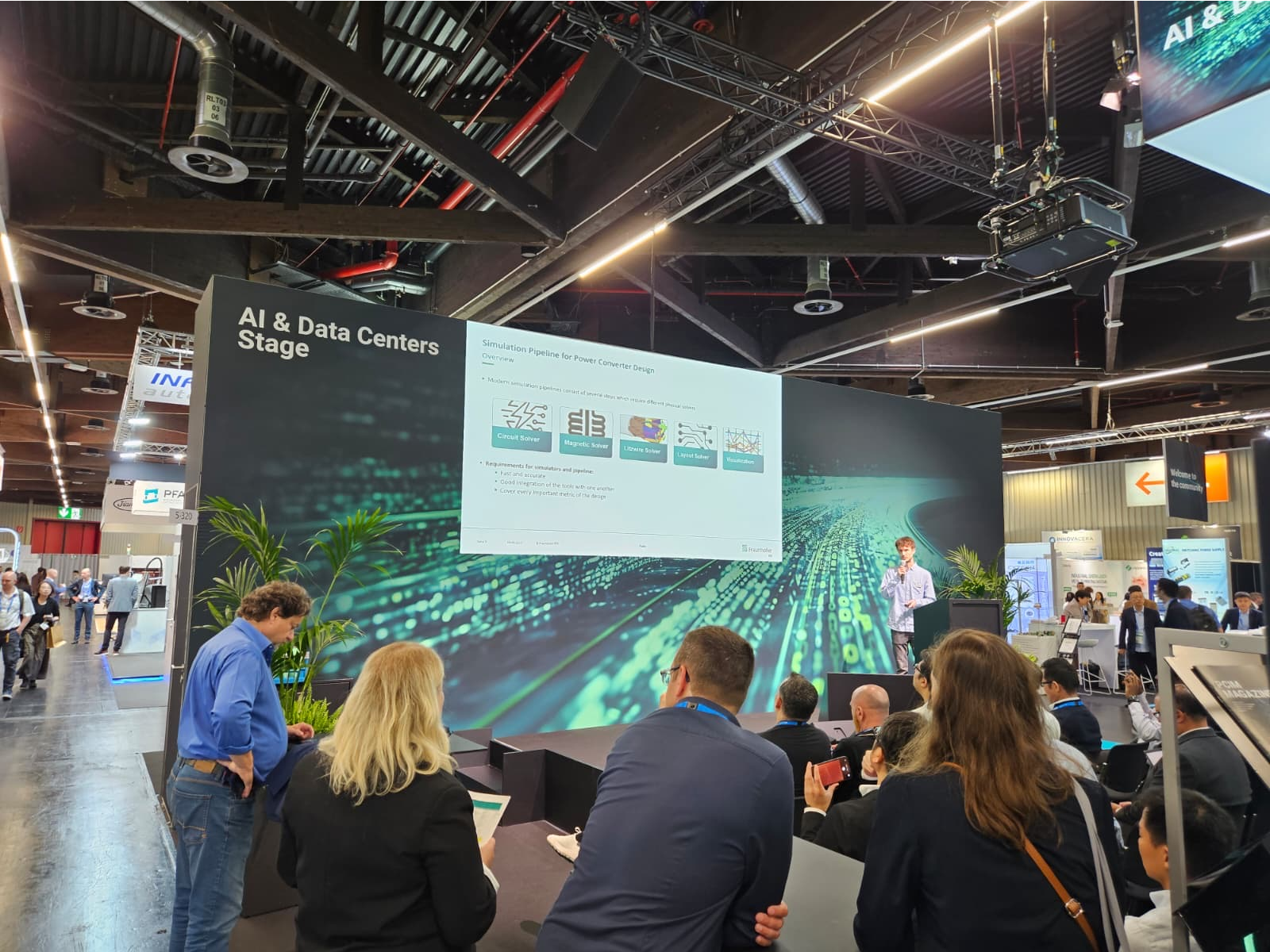
This year, our group was represented by Georg Kruse at PCIM Europe in Nuremberg, Germany, a leading conference for power electronics and energy management. His talk explored how artificial intelligence is reshaping power electronic design workflows—from topology-level parameter optimization of resonant converters to physics-informed neural networks (PINNs) as fast surrogate models for transformer design, and reinforcement learning for optimal component placement in power modules. Looking ahead, Georg outlined a vision for integrating these techniques into a cohesive, AI-enhanced simulation workflow that supports both holistic power converter design and targeted component-level optimization. We look forward to future editions of PCIM.

April 25, 2026

ICLR 2026
news
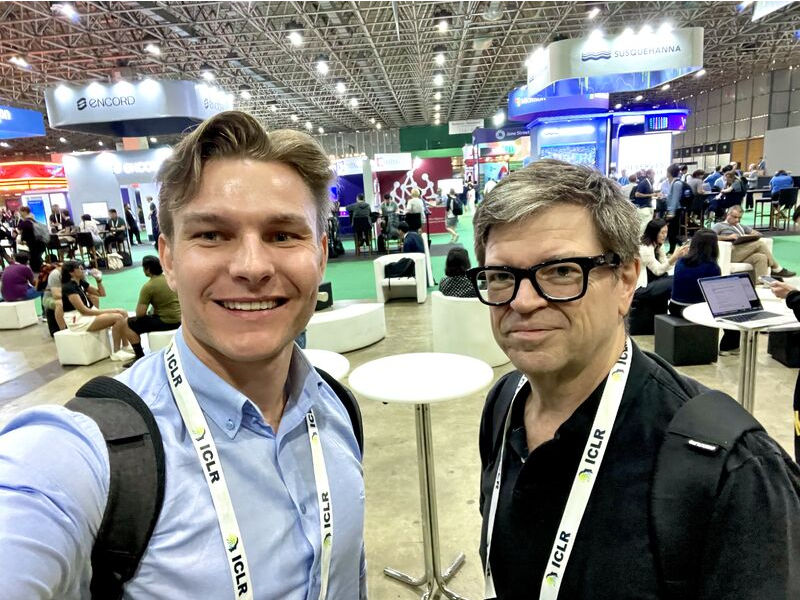
ICLR 2026
Vlad Medvedev represented our group at ICLR 2026, one of the premier international conferences on machine learning. Being surrounded by so many brilliant researchers and innovators—and hearing diverse perspectives on the future of AI—made for a genuinely energizing experience, with exciting discussions around foundation models and world models and their potential for real-world impact. A particular highlight was meeting Yann LeCun, often described as one of the godfathers of AI. Vlad returned more motivated than ever, and we look forward to future editions of ICLR.